ManetasTimeline

Menu

FEBRUARY 2024:

Epiphany: Assange & Jesus
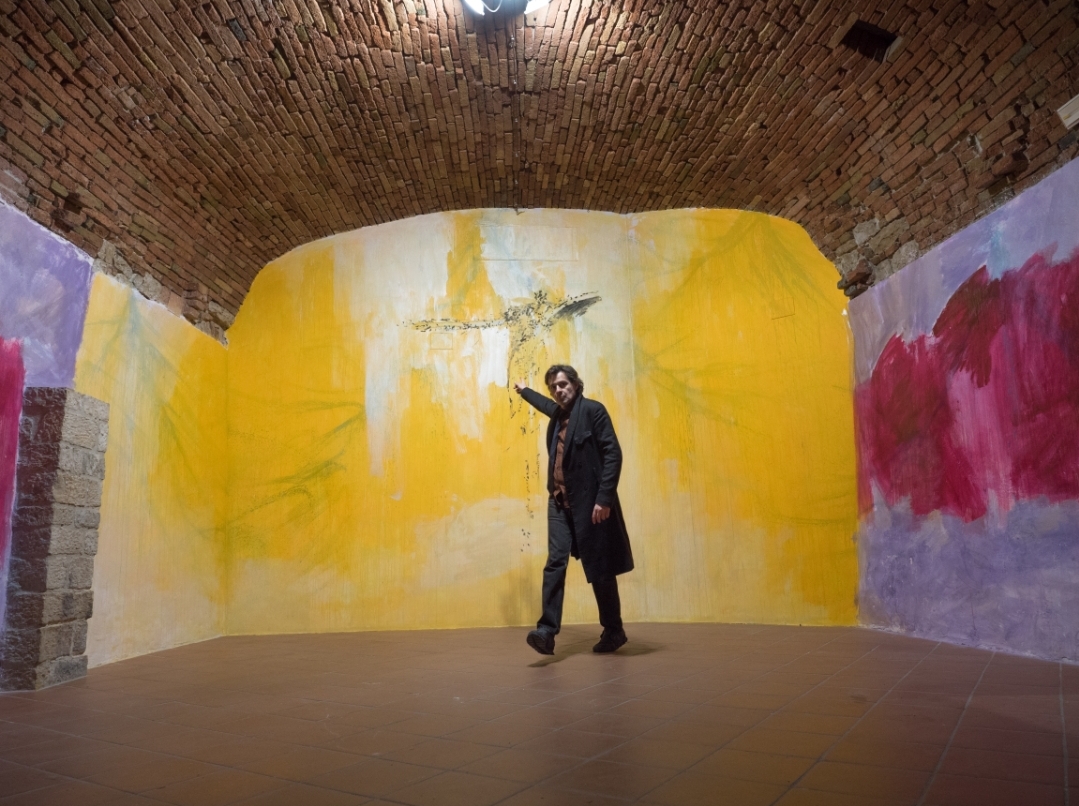
ZOOM "EPIFANIA: Julian ASSANGE & JESUS Christ Matteo Boetti"s CollAge, Todi

CONTINUES:

"The Four Fronts of the Ideal Villa"

by Despoina Damaskou

ACT III "ÉCLAIR" Spaghetto Silo Athens

ACT II PART 03, "I WAS THINKING I WAS THINKING ABOUT MY LIFE I WAS THINKING ABOUT THE OPENING" Spaghetto Storefront Athens

CONTINUES:

"Moderñity"

by Despoina Damaskou

"BECAUSE OF BEING DRAWN AND REDRAWN>A NEW PRESSION/IMPRESSION/EXPRESSION OF MODERÑITY" Spaghetto Silo Bogotá

FROM APRIL 17:

"Church of Prompts"

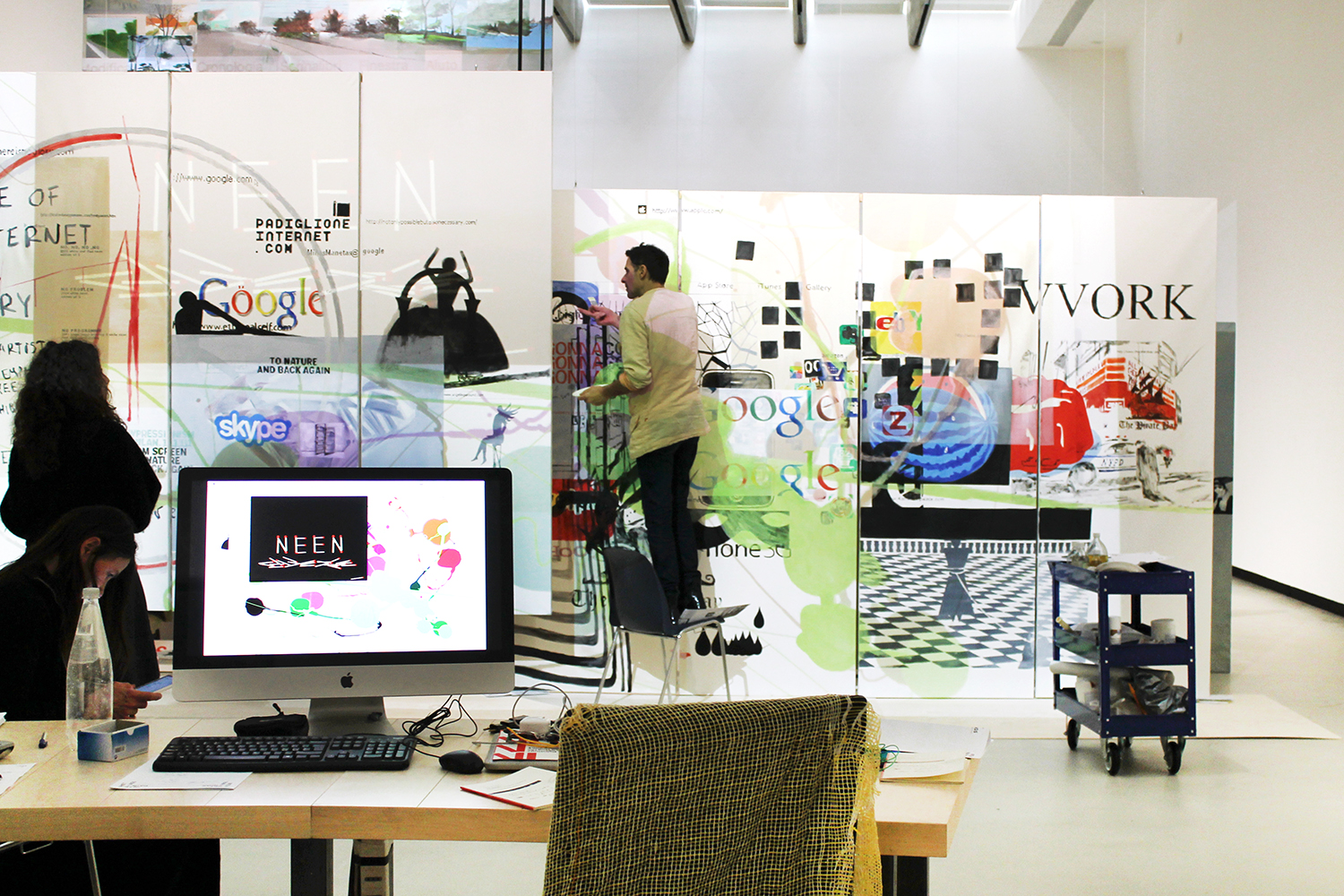
The 8th Internet Pavilion of the Venice Biennale
ARTIST AND THEORIST

Miltos Manetas is a Greek-born painter, conceptual artist and theorist. His work explores the representation and the aesthetics of the information society. Manetas is the Founder of NEEN (the first art movement of the 21st century), a pioneer of art-after-videogames (MACHINIMA) and instigator of POSTINTERNET and NFT.
In 2009 Manetas was invited by VENICE BIENNALE to create the first INTERNET PAVILION. In 2014, Rome's SWISS INSTITUTE hired Manetas to bring Swiss art to the Digital Age and Manetas came with the concept of ÑEWPRESSIONISM which he went on developing on Social Media using his techniques of OVEREALITY and METASCREEN.
in 2017, Manetas used DOCUMENTA 14 for his concept of MEDIOSUD. In 2018, Rome's MAXXI realized Manetas' INTERNET PAINTINGS, a three months performative exhibition. In 2019, his NEOUMILE Modus Operandi was hosted by Rome's MACRO. In 2021 MANETAS FLOATING STUDIO began. From 2023, Manetas is producing AI POLAROIDS.
According to LEV MANOVICH, Manetas' art can be placed within a well-established tradition in modern painting (representing modern people in their particular modern settings). According to NICOLAS BOURRIAUD his work belongs to the domain of RELATIONAL AESTHETICS and POST-PRODUCTION

»I have no time for success and money«
»How do you program life? By painting it!«
»Come perfezionare una pittura? Guardandola!«
»Come programmare la vita? Dipingendola«
»How to optimize a painting? By looking at it!«

The last Five Years

That´s what I did the last five years...

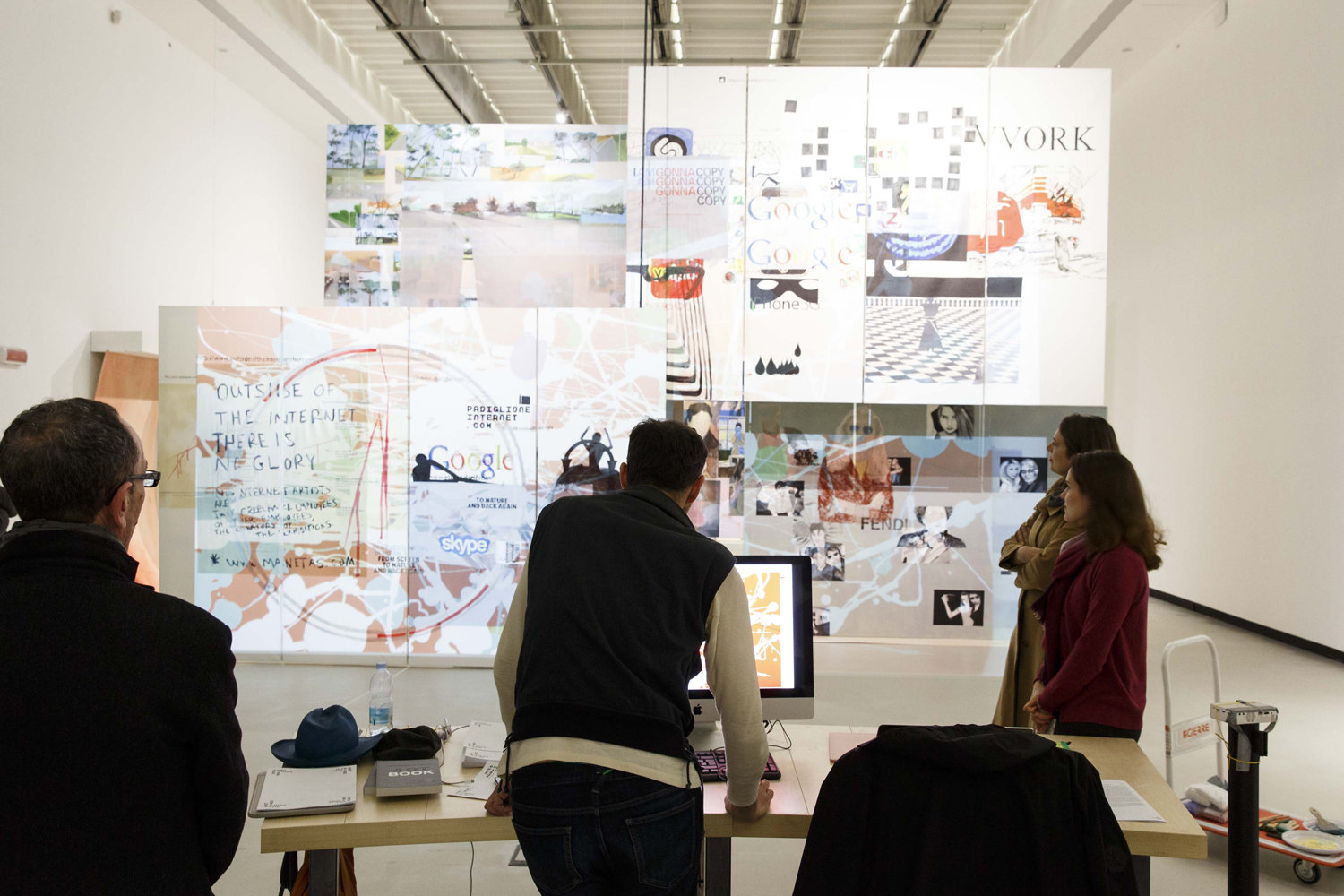
"Internet Paintings" at MAXXI

MAXXI dedicates a focus exhibition to the artist that between social networks, selfie, fashion and Google Street View explores the imaginary of the contemporary age. For his solo show Miltos Manetas brings together with large canvases a world populated by selfies, a reality observed by Facebook, pornographic images next to fashion, the streets of the whole world he recorded by Google. A painter, conceptual and theoretical artist, recognized at international level for his internet-based works and for having founded in 2009 the first Internet Pavilion at the Venice Biennale, Miltos tells about the emotions and the imaginary of our contemporary era. Curator: Bartolomeo Pietromarchi

2018


Recognised worldwide for his internet-based works investigating new technologies and their influence on human beings, the artist brings together on canvas inputs from the virtual world and processes them through the analysis and decodification of the real and its representation, thus creating a new inconographical system of the present.

Museum solo show


Through oil painting and the web, the Internet Paintings come to life on canvas Collages of site and images collected on the web, the surface of the Internet Painting modifies, updates and houses new pages just as every web site continuously evolves, appears and disappears. The themes of the paintings in the project: #Bb9#BerlinBiennale2016 (il presente travestito), Google Street View, MedioSud, Moda Muerta, Natura Matura, NEEN + Ñewpressionism, Selfies.

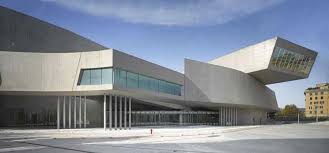
MAXXI, Rome, Italy


Manetas’s creative process, based on a profound need to communicate typical our present is shared with other people: throughout the period of the exhibition those who responded to an open call will play an active part, together with the artist, in the conception, creation and modification of the pictorial cycle.

And in 2022, "Notte Oscura"

at Fondazione Memmo in Rome. Notte Oscura_Conversation Piece | Part VIII Pauline Curnier Jardin, Victor Man, Miltos Manetas. Curator: Marcello Smarrelli

2022-23


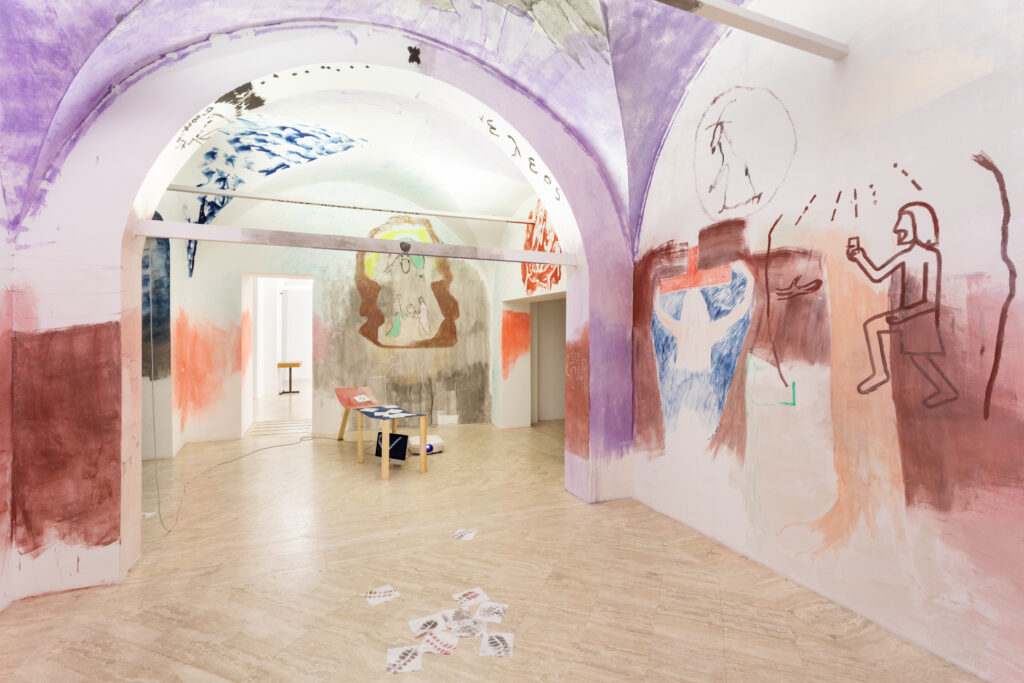
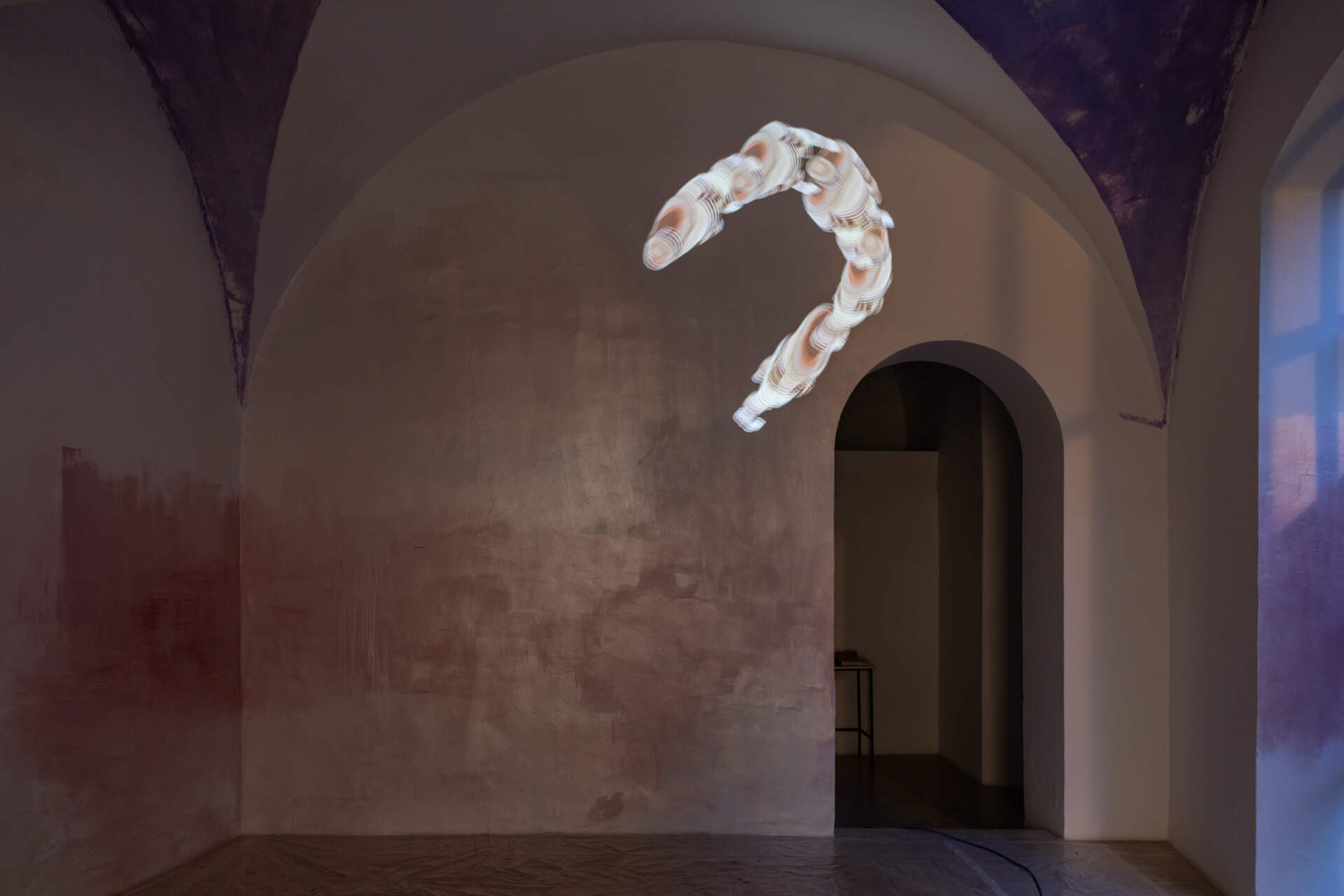
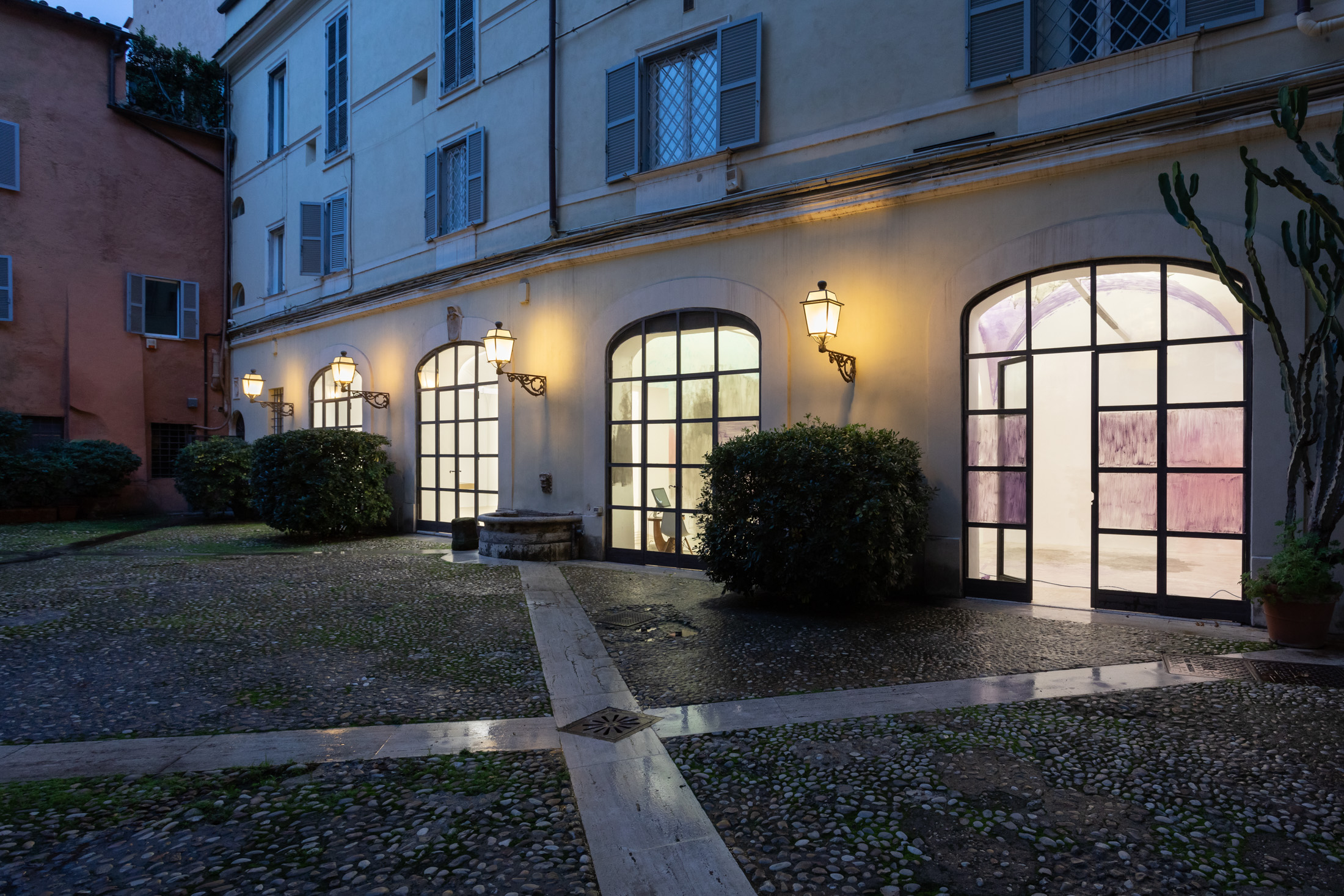
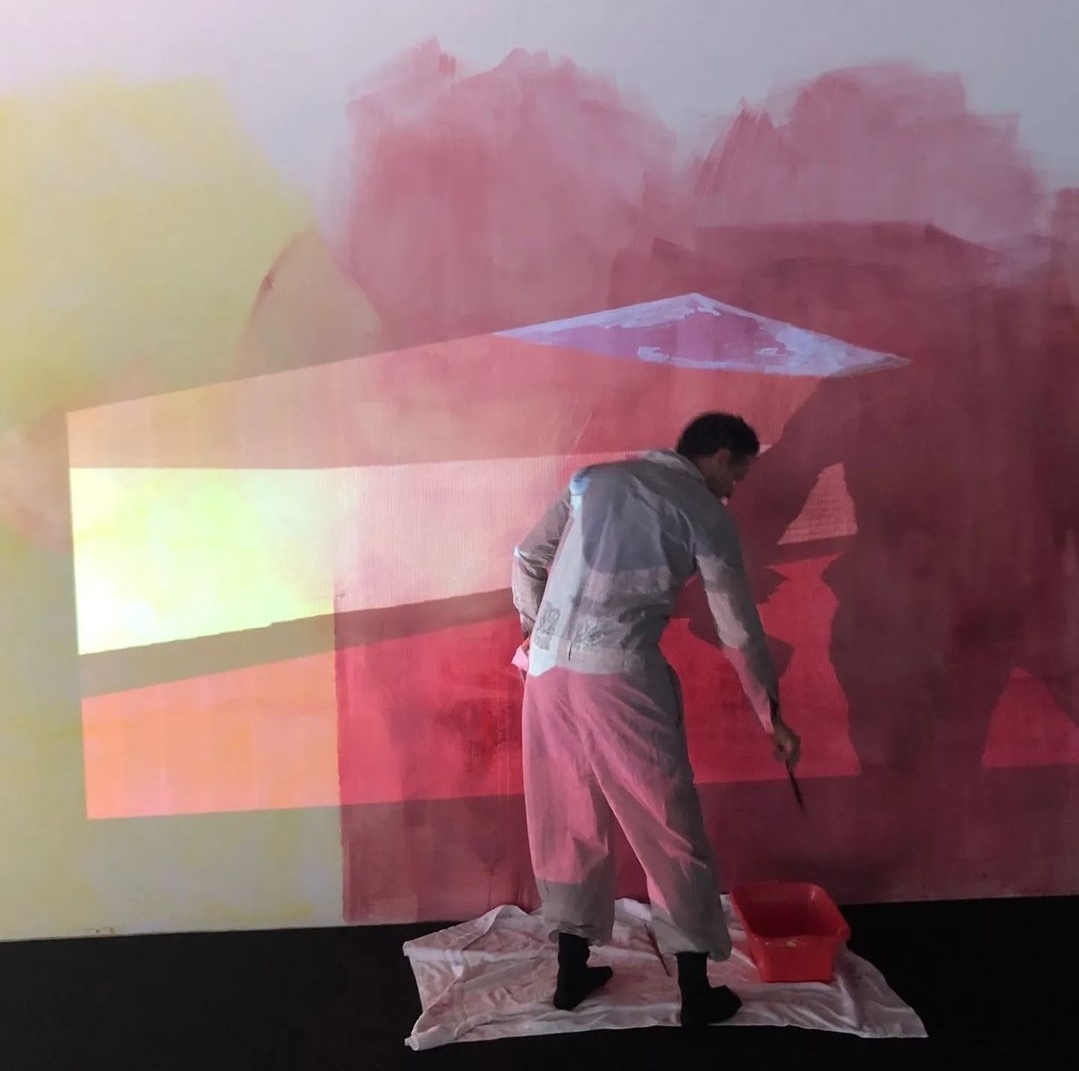
Manetas proposes a work in situ and in progress with the help of his ‘assistant’ DALL-E (AI capable of generating images from textual descriptions). Manetas defines this type of work as his ‘contemporary cave’ which, in short, is an environment totally covered by his anti-painting (a light, ephemeral paint produced by pouring liquid soap over colour pigments on the wall, with no basic preparation), continuously tracing and erasing the images produced by DALL-E. In fact, the work continuously changed shape during the course of the exhibition, with the artist periodically intervening. The environment, therefore, acquires anti-analogue characteristics: analogue-digital in its demiurgy, digital mimesis in its display, leading the concrete walls of the exhibition space to resemble – not so much in form as in meaning – a digital environment, a screen of our ever-changing existential technological devices, eternally poised between aesthetics and knowledge, never stable or ever completely clear.

Important group show


The relationship between Manetas and DALL-E is reciprocal and fruitful for a work that cuts across different planes of reality. Manetas and DALL-E, as one, are a cyborg, but their product is totally opposed to the bit, irreconcilable with digital space. Rather, the artist becomes a rupestrian cyborg, a machine that has not forgotten its thousand-year human history, producing a contemporaneity strongly characterised by digital technology, but human at heart. And what can be more obscure for the human – living by sensations, perceptions, senses – than digital space, produced by bits and generated by rational databases? In his analogue and almost tribal environment (the ‘cave’) Manetas foregrounds all elements that, when speaking of the digital, are exclusively human.

Fondazione Memmo


Manetas’s device, is complex and multifaceted, transcending the analogue-digital dichotomy just as the exhibition itself transcends the light-dark dichotomy. The darkness that Manetas displays is the ‘darkness of knowledge’ that grips us, between the analogue and the digital in which we exist, in which the concept of truth and falsehood can no longer find meaning. ManingtheDark.com is an illusion – a phantasmagorical creature posing as real in a real space posing as phantasmagorical. Boundaries become imperceptible and luminous darkness makes digital ghosts appear.
Caves become simulacra of the web while reality becomes more and more multifaceted with a decisive, ephemeral complexity.
Fabio Giagnacovo for https://www.arshake.com

MANETAS AI POLAROIDS

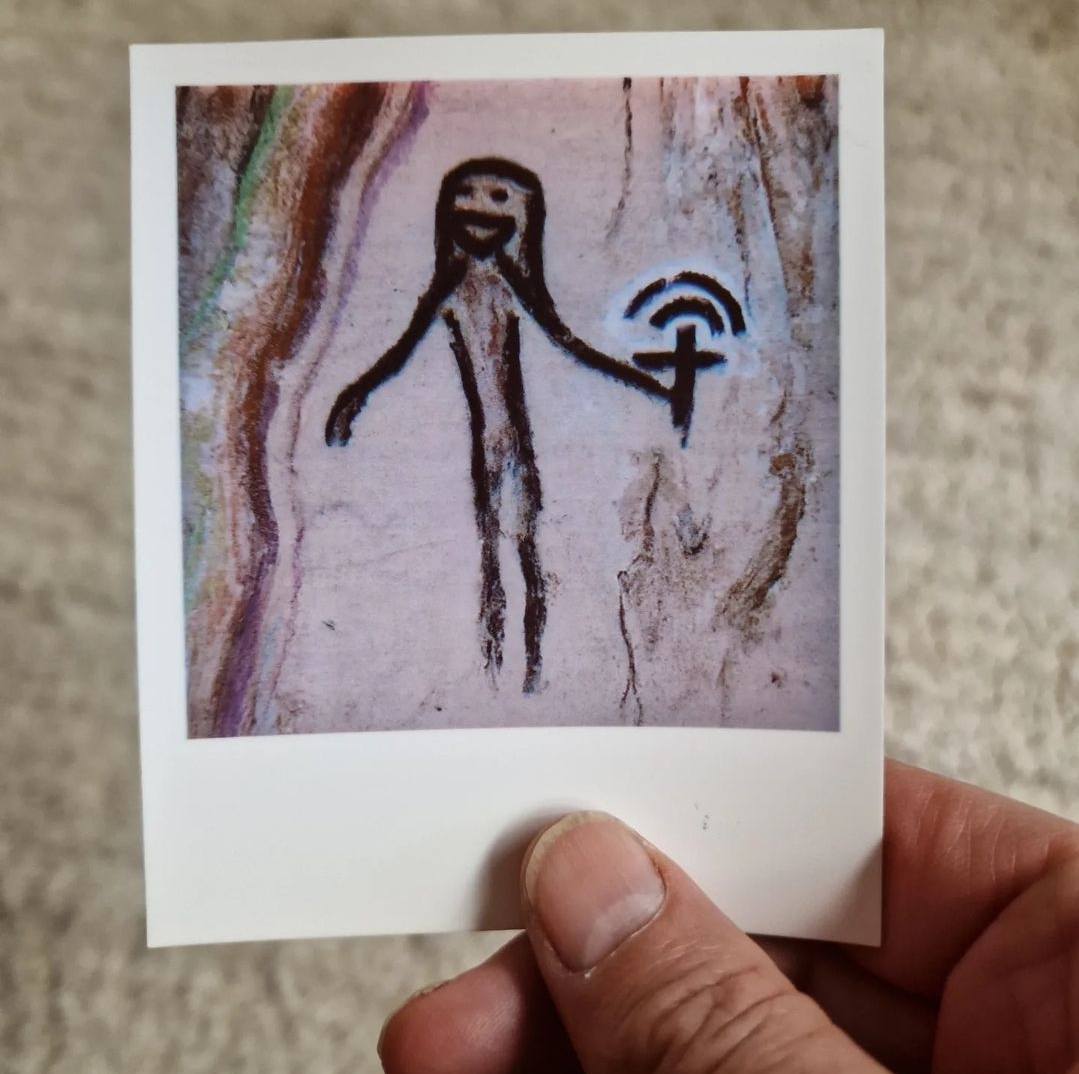
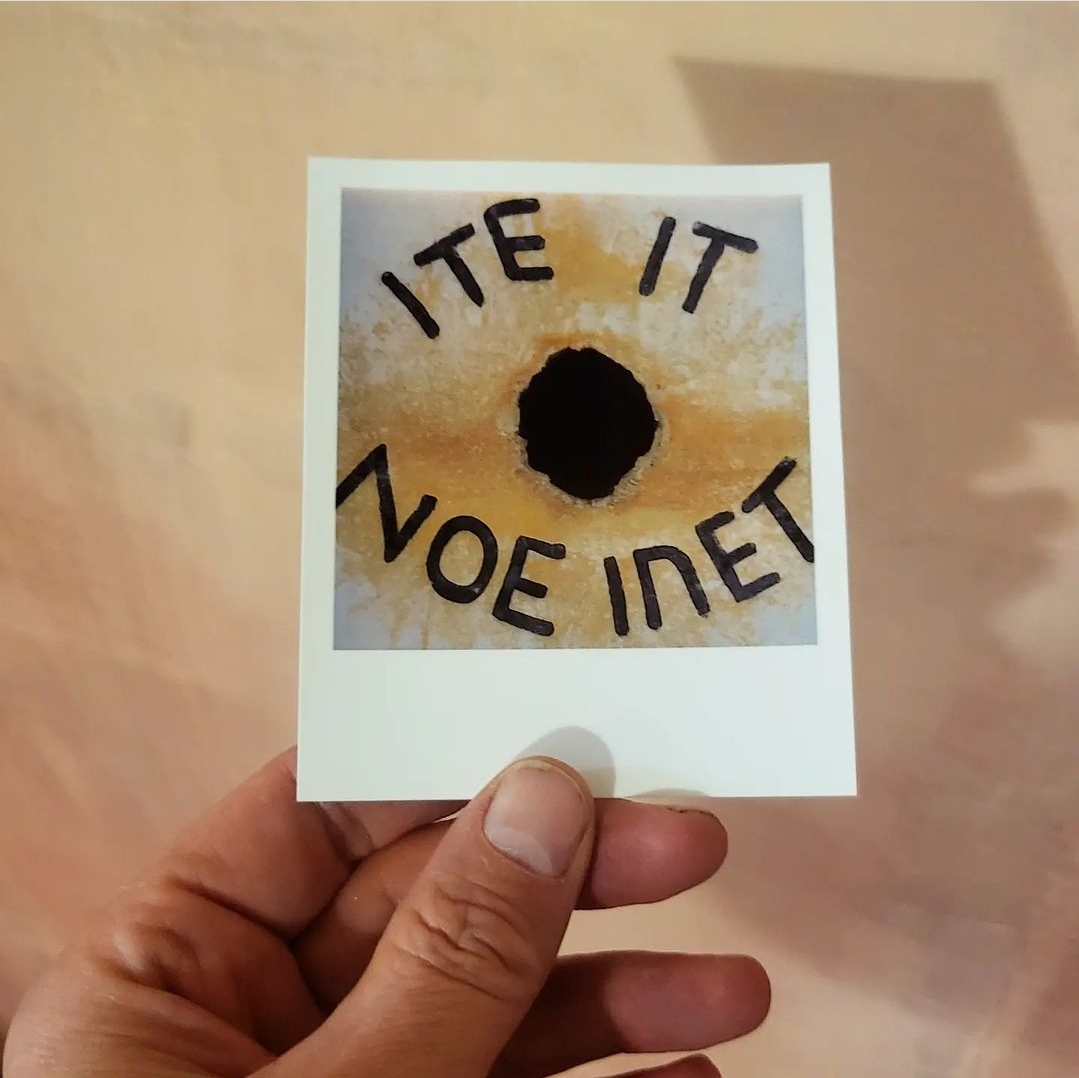
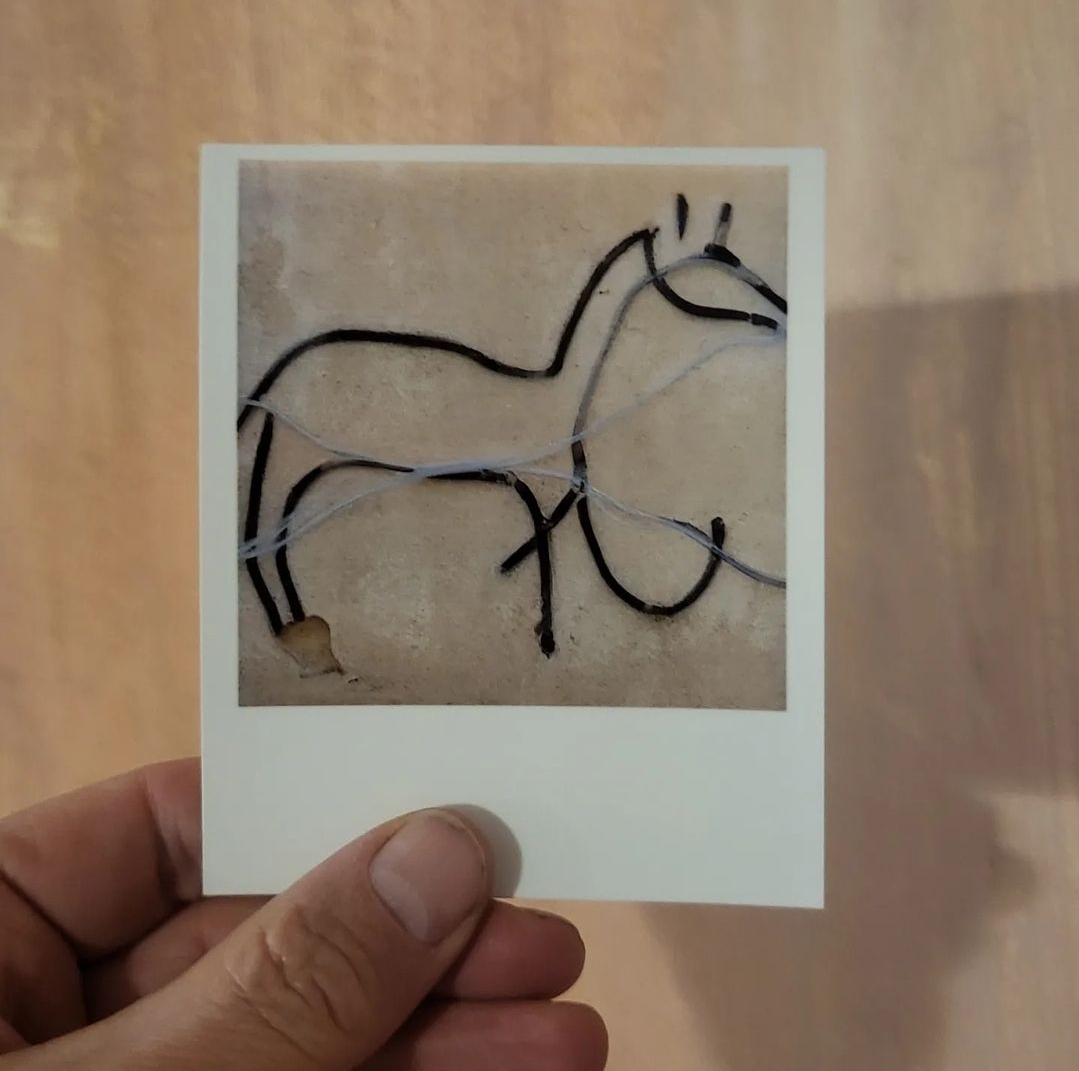
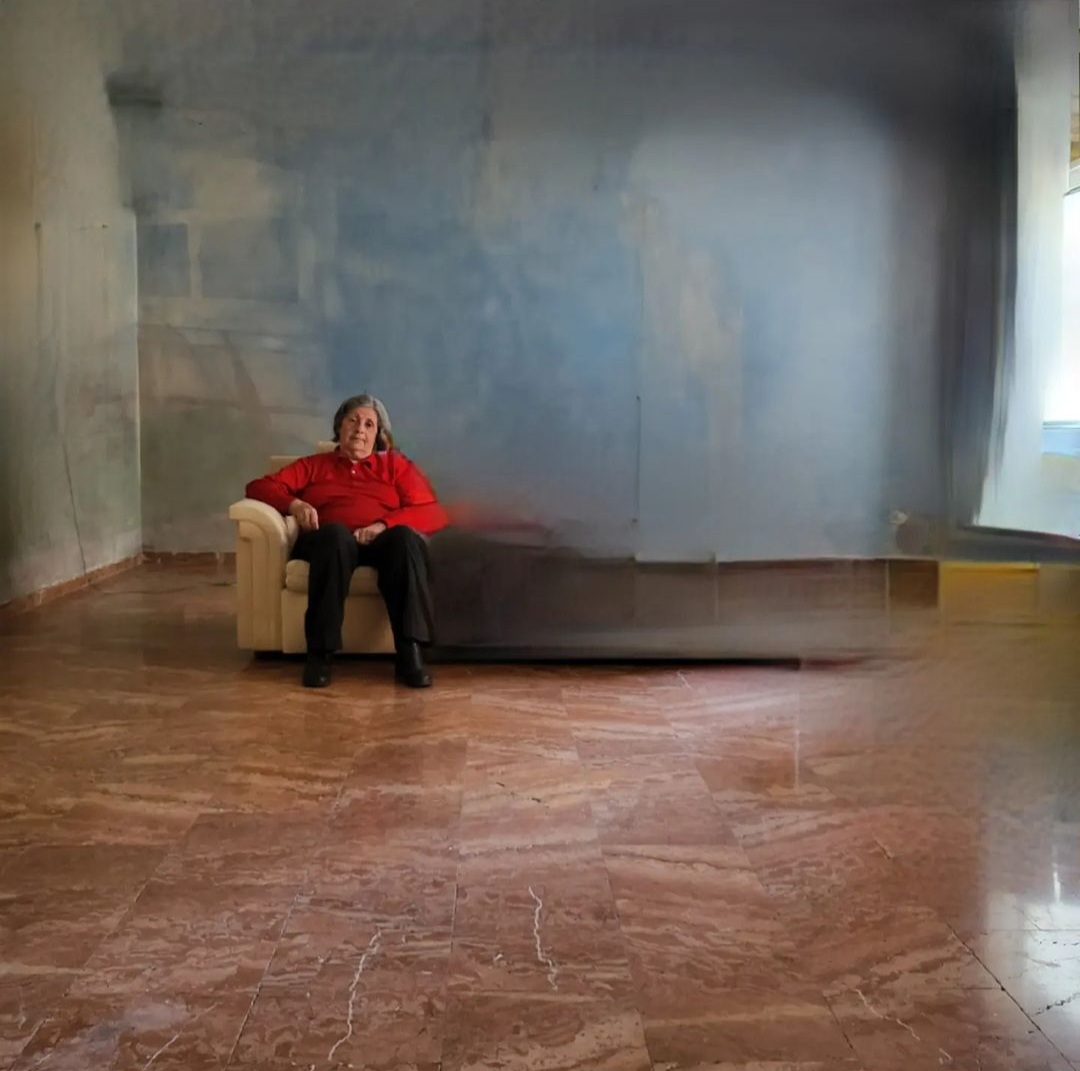
During Notte Oscura at at Fondazione Memmo in Rome, the first Artificial Intelligence Polaroids appeared

From 2023


Prompt: "JESUS BRINGS BACK CONNECTION"

Artificial


Prompt: "TRANSLATE "OUTSIDE OF THE INTERNET THERE IS NO GLORY" TO YOUR TOUNGUE"

Intelligence


Prompt: "TRANSPARENT BLACK INTERNET CABLES TRANSFORMED TO TRANSPARENT HORSES TRANSFORMED TO TRANSPARENT LETTERS TRANSFORMED TO TRANSPARENT ROCKS TRANSFORMED TO TRANSPARENT BLU"

MANETAS FLOATING STUDIO

From 2021, I start exporting Metaverse to real life using soap over pigment

BORN In OCT 1964

EARLY DAYS
in Rome & in Milan

EARLY STUDENT-DAYS IN ITALY

In 1985 I left Athens. The Art-school there wouldn't accept me. "Don't lose your time, you have no talent" one of the professors said- I think his name was Tetsis or Kokkinidis . Or maybe was Yiannis Moralis who 40 years earlier, at the eve of his professor career had refused Jannis Kounellis: "Don´t try Jannis, you have no talent."

3D tree

1986 in Milan

"Plywood Vases" Vehicles of Identity

My First Gallery One-Man Show

“Finishing artschool I looked around me. Art-people everywhere, artists, collectors, gallerists, art-writers, photographers.. I thought I should start from them. Come to know them and at the same time produce a work from their faces, their profiles to be exact... I´d go met them and I´d ask them to pose for a profile picture. Then I ´d draw each profile on a piece of plywood, cut it out, curve the name of the person on it and hang them all alfabetically in the gallery. It was some kind of performance, a primitive Facebook...

FIRSTSHOWS
FIRST SHOWS

Successfully Contemporary

“These were the years of Art Magazines and NeoGeo. Many same things.. In Greece an enthusiastic collector was buying everything. Together with his friend Jeffrey Deitch they were planning POST HUMAN, a very important show and they wanted to include my "51 Chairs and a few Assholes". I got inspired.. Dakis owned a big hotel, The Intercontinental. I remember reading somewhere about computers and projectors and although I had never seen one, I asked Dakis if I could make a new work to one of his many hotel rooms instead, using a computer. I wanted to start travel all around the globe and from time to time, to send pictures by FedEx that an assistant would be loading to a computer and projecting them in such a way that every time that hotel´s door would be opened, a new fresh picture from the world would appear. It was a pro-Facebook fantasy but Dakis said he didn't´ like computers and finally they never include me in POST HUMAN, Jeffrey replaced me with someone from NY who was doing something quite similar to my 51 Chairs.

"Demenza"

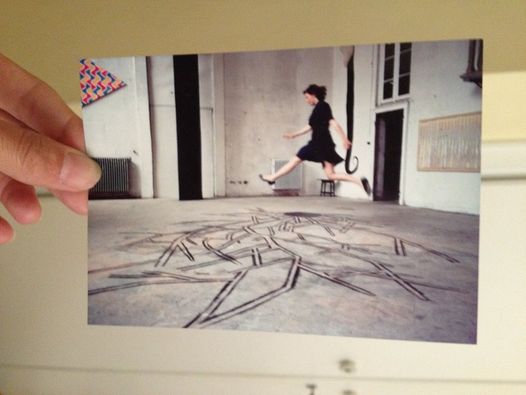
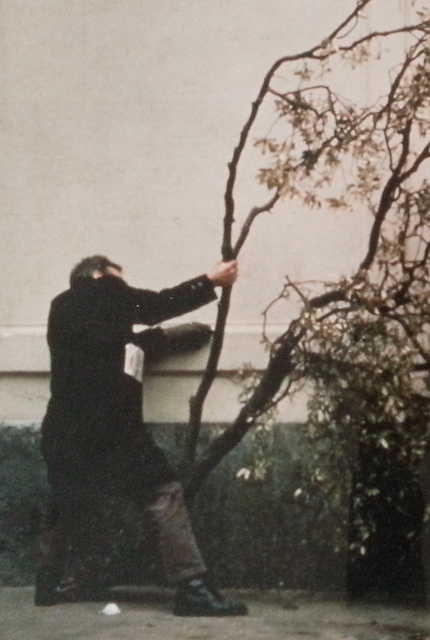
“Demenza, 1990-1994. Each photo, edition of 3, Exhibited at FATTO IN ITALIA, Contemporary Art from Italy, Centre d'Art Contemporain, Geneva,- ICA, London. Published at the catalog of TRAFFIC, CAPC Museum of Contemporary Art, Bordeaux, FR

DEMENZA IN NAPLES

Lunacy, Insanity, Socratic Irony

“In Greek ancient comedy there are two dogs: Eirôn and Alazon. Eiron was a clever underdog who by his wit repeatedly triumphs over the boastful character Alazon. According to Encyclopaedia Britannica, the Socratic irony of the Platonic dialogs derives from this comic origin. The Italian word "demenza", (from the Latin dementia deriving from "demens"), translates in English to "insanity" and "lunacy". I believe there exists a certain performative element of the world that can be expressed with a certain lunacy and insanity. In that sense, "demenza" would be better translated as "irony", not the irony of our days but the Socratic irony, an attitude that isn't just limited in the dissimulation of ignorance but becomes- as a matter of fact- a performance.

»Demenza«

The Concept of Irony with Continual Reference to Socrates

“‘As Søren Kierkegaard explains on his doctoral thesis, "The Concept of Irony with Continual Reference to Socrates" “Socrates not only used irony but was so dedicated to irony that he himself succumbed to it.” That was back then, when the world was fresh. In our days, such "insanity", not only is often performed (especially in the arts & spectacle) but more importantly, it has become an element of our environment. We find "demenza" in our cities, in Milan, Athens, Berlin (where I took some of these pictures) and sometimes we also find it in the countryside

"My Floor" Paintings

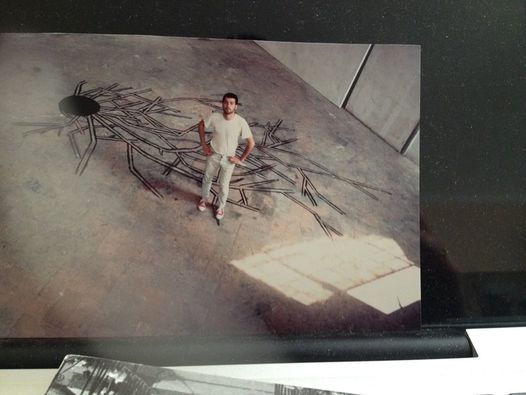
“"My Floor" Paintings in NYC